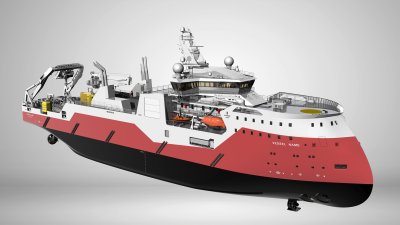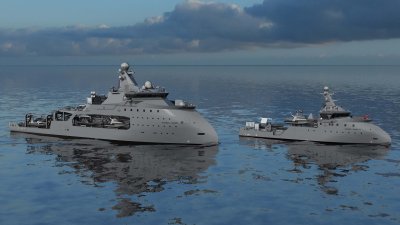
Crew transfer vessels, normally small catamarans, are often the preferred means of personnel transfer to and from offshore wind farms close to land. For long distances, helicopter can be used. However, the combination of long distances, tough conditions and with many turbines to serve, the need of a Service Operation Vessel (SOV) arises. This reduces the high costs of maintenance and service of offshore wind plants.
Not just a ship. Also a taxi, hotel, store and workshop
The SOV operates as a means of transport, but it is also a hotel, a warehouse and a workshop - and a temporary home. An SOV is reliable, fast and safe, and is able to transport large quantities of spare parts and tools. It can take on unplanned tasks, if the need arises. Service Operation Vessels can transit quickly from land to the offshore wind farm, and their nimbleness comes in handy when transporting equipment and technicians to and from the turbines within a farm. The vessel can stay at the wind power farms for several weeks at a time. The vessel always being fully manned, service will be performed more quickly and downtime of the power plant is reduced.
Workshop facilities
The vessel holds workshops, enabling the technicians to perform maintenance near the wind farms. Faults that require workshop repairs can be fixed immediately.
Safe transfer of personnel and equipment
Thanks to a hydraulic, walk-to-work gangway system, the maintenance team can safely walk to the turbines in wave heights up to 2.5 metres or more, which is more than the Crew Transfer Vessels can manage. Additionally, the crane on the SOV can hoist equipment and spare parts from the vessel onto the wind turbine platform. Even in challenging weather, the technicians can keep on working on the turbines safely and efficiently.
A home away from home
Comfort for the usually land-based technicians is an important aspect for an SOV. The technicians will live on the ship for several weeks, and need good facilities for meals and spare time relaxation and exercise. Most importantly, they need to be fully rested when their shift begins.
'As quiet as a mouse'
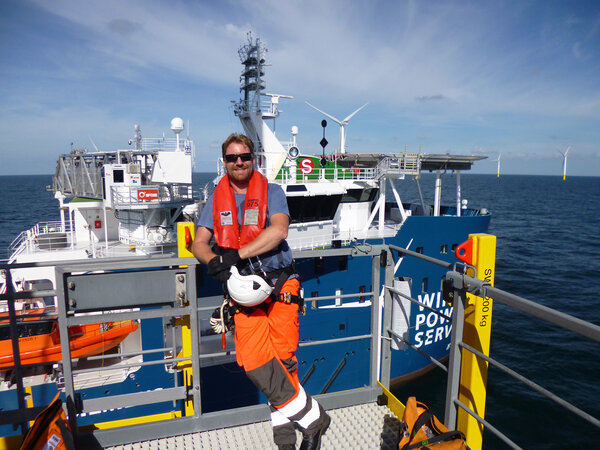
Planning & Cost Engineer Guido de Groot (main photo, courtesy of Gemini) is working in the Operations & Maintenance organisation of the Gemini Wind Park team. One week he works in the office, the next he is offshore, living on board the SOV 'Windea La Cour'.
In an interview with Gemini's 'Living On Wind', he comments that:
This new ship is a breath of fresh air. As quiet as a mouse. And so stable! I sleep better in my cabin than I do in an average hotel room. It's a hotel and an office in one. In short: I'm having a great time here!